
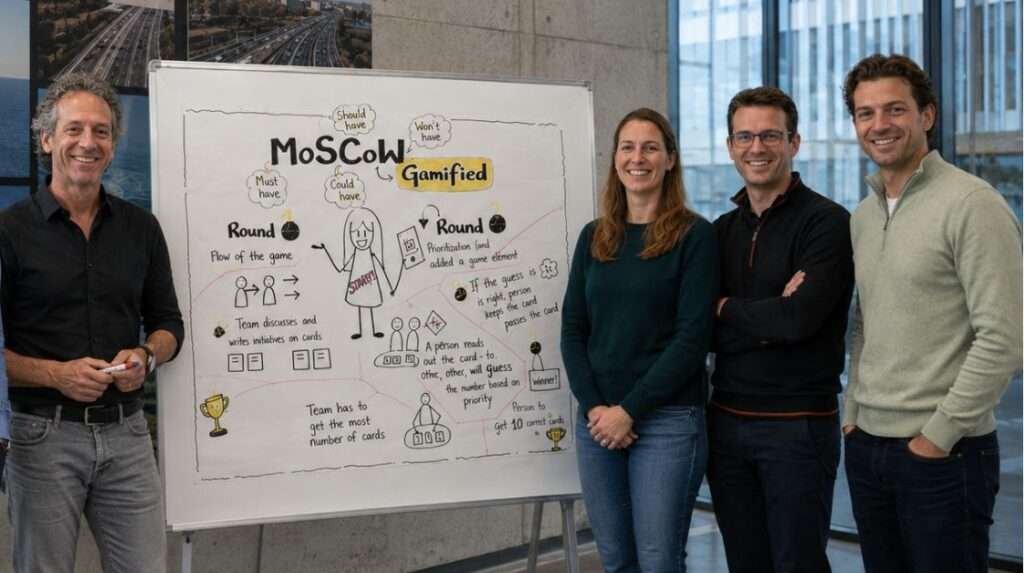
Consulting Company in Eindhoven, Netherlands
A mid-sized consulting and engineering firm based in Eindhoven, Netherlands with 350 employees across multiple business units.
Organisation was preparing for a major transformation initiative involving:
Every department believed its initiatives were the most important.
The leadership team had dozens of potential projects but no shared understanding of what should be:
As a result, meetings were becoming debates instead of decisions.
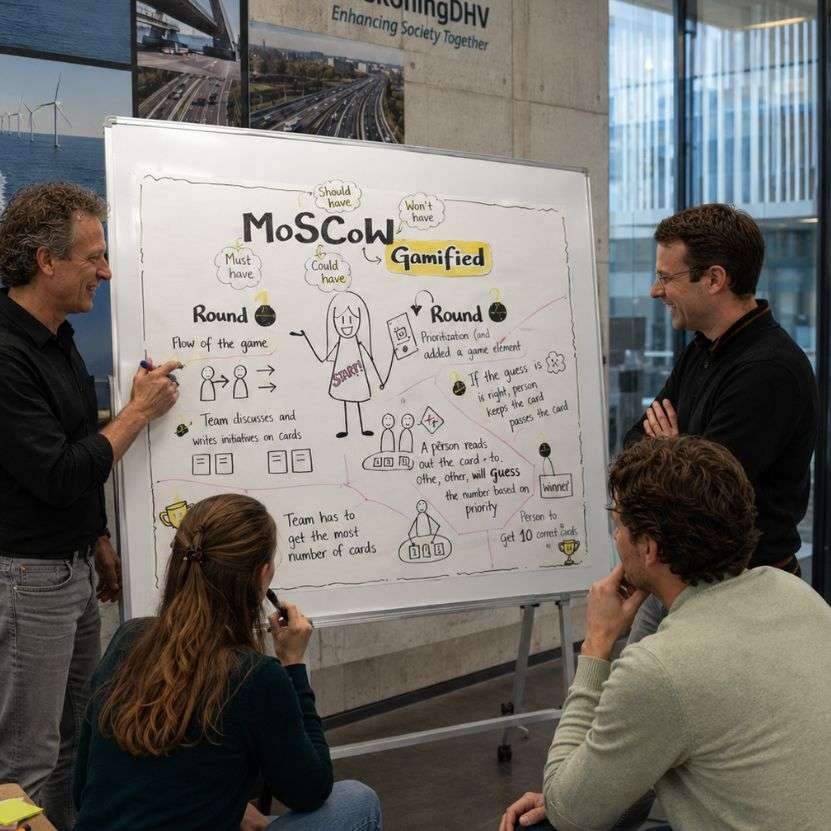
Create a shared understanding of priorities and strategic trade-offs.
Instead of beginning with PowerPoint presentations, we facilitated a visual strategy workshop.
Using Business Sketchnotes and Visual Storyboards, we mapped:
We then introduced several visual strategic thinking models:
The leadership team could literally see how competing priorities were affecting execution.
Participants quickly recognized that:
“Everything cannot be a priority.”
Visual thinking reduced ambiguity and created a common language for discussing trade-offs.
Move from understanding priorities to experiencing priorities.
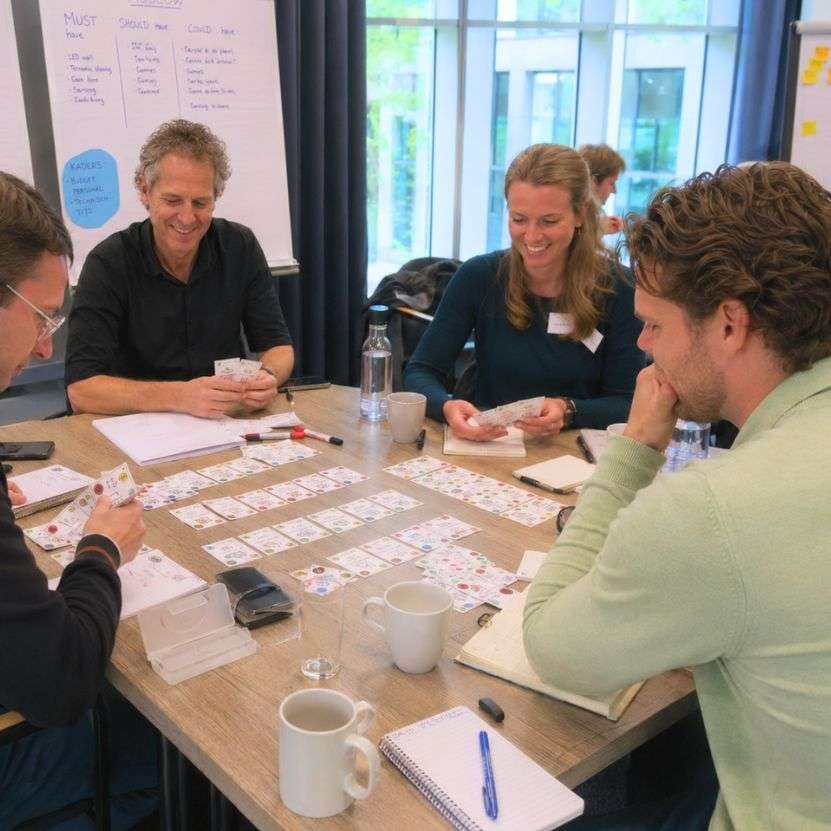
Instead of teaching prioritization through theory, we introduced the MoSCoW Priorities Game.
To make the concept easy to understand, we first used a neutral scenario:
Participants received a deck containing wedding-planning decisions such as:
Unexpected events were then introduced:
Participants had to make difficult choices using the MoSCoW framework. The game included essential and optional wedding elements along with scenario cards that forced trade-offs.
The wedding scenario removed workplace politics.
People immediately understood that:
The game generated more engagement than a traditional training session.
Transfer learning into the client’s real business environment.
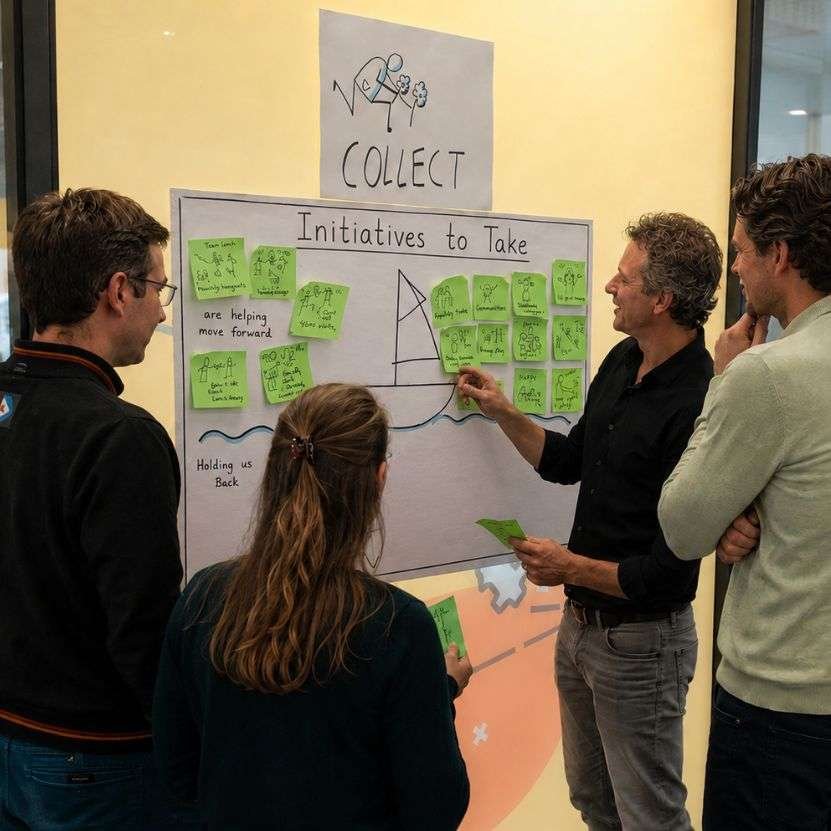
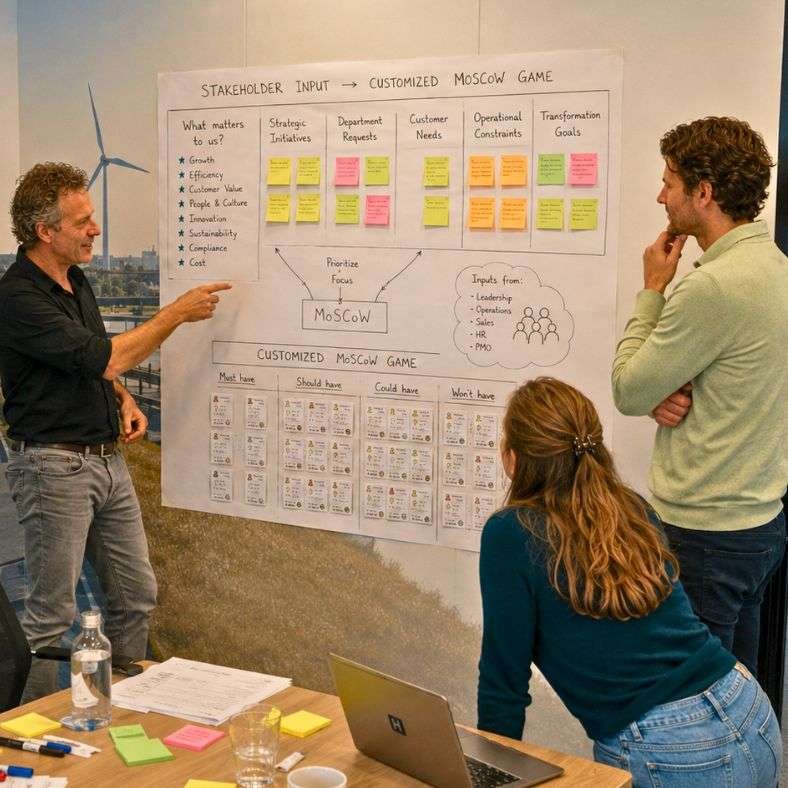
After the game, we facilitated a visual stakeholder extraction workshop.
Using large-format visual canvases, teams mapped:
Through guided visual facilitation, we collected stakeholder inputs directly from:
The outputs were translated into a customized MoSCoW game.
Here’s a video of our co-creation process
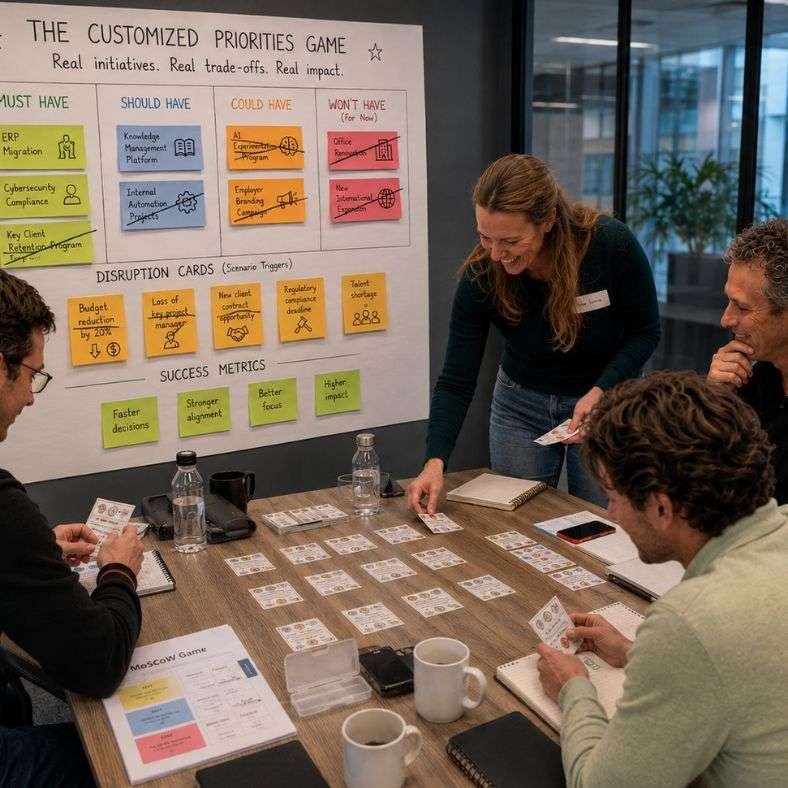
The wedding cards were replaced with actual business initiatives such as:
We also created custom disruption cards:
Teams then played with their own reality.
Within two workshop rounds the leadership team reached alignment on:
✓ Faster decision-making
✓ Reduced stakeholder conflict
✓ Shared prioritization language
✓ Clear ownership of initiatives
✓ Stronger cross-functional alignment
✓ Higher engagement than traditional planning meetings
Measured Impact: The intervention reduced the strategy alignment cycle from approximately 6 weeks to 4 weeks, enabling faster decisions, earlier execution of priority initiatives, and more effective utilization of leadership time.

“For the first time, we stopped discussing everything and started agreeing on what truly matters. The visual facilitation and customized MoSCoW game turned a difficult prioritization exercise into a constructive decision-making process.”
This transformed prioritization from an opinion-based discussion into a data-informed, stakeholder-owned decision process.
Traditional consulting often tells people what to prioritize.
The P.L.A.Y. Method™ helped stakeholders:
Visualize complexity.
Experience prioritization through gameplay.
Use their own business realities.
Generate decisions, alignment, and action.
The result was not another strategy document.
The result was a leadership team that could confidently decide what matters most.

Piyuesh is the founder of Visual Thinking School, Netherlands. He is passionate about empowering organizations and classrooms with Visual Thinking Skills. He conducts trainings onBusiness Sketchnotes™ , Classroom Sketchnotes™, Visual Business Storytelling™, Graphic Facilitation™
In his free time, piyuesh likes practicing Aerial Yoga, Acro yoga, Krav Maga and Pole workouts.